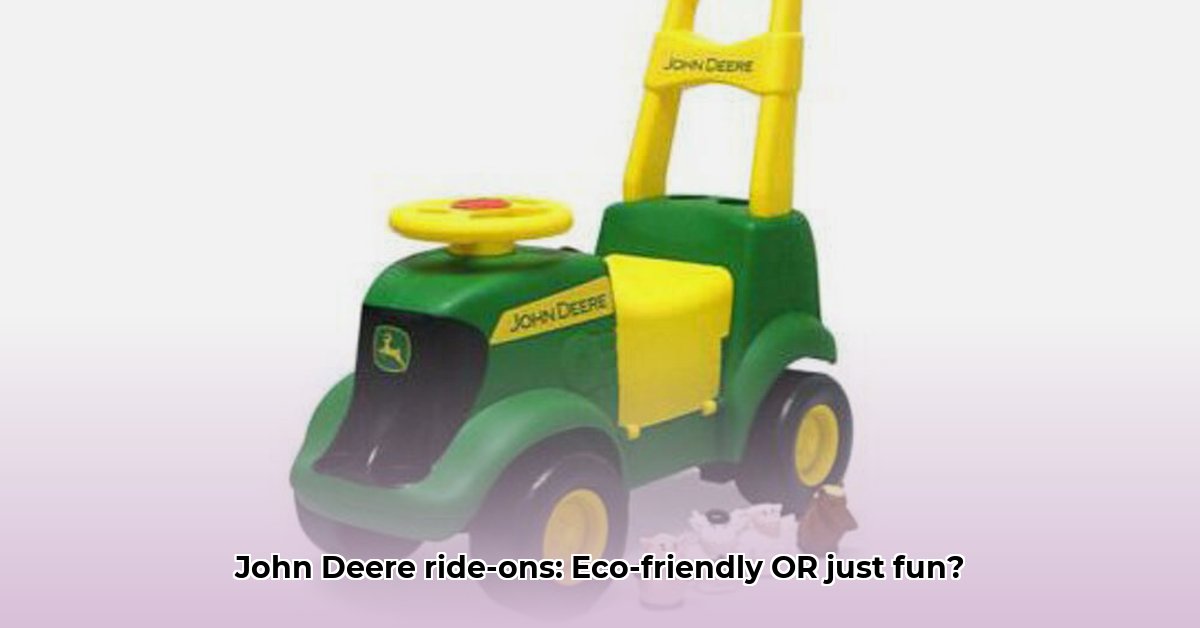
The Sustainability Puzzle: Beyond the Green Paint
John Deere ride-on tractors are a childhood classic, offering hours of imaginative play and a connection to agriculture. But are these toys genuinely eco-friendly, or do their charming aesthetics mask a less-than-sustainable reality? This review delves into the environmental implications of these popular toys, examining their lifecycle from production to disposal. It's not just about green paint; it's about responsible manufacturing and consumption. Do these tractors contribute to a greener future, or are they part of the problem? Let's investigate. For more information on John Deere's agricultural equipment, check out their attachments page.
One immediate challenge is the lack of readily available information regarding the environmental impact of these toys. Many manufacturers, including John Deere, don't publicly share detailed life cycle assessments (LCAs), hindering a comprehensive evaluation of their sustainability. This lack of transparency makes it difficult to assess their true environmental footprint. A thorough LCA would analyze every stage, from raw material extraction to end-of-life disposal. Without this crucial data, effective assessment remains impossible.
The materials used are paramount. Are the plastics recycled? Are paints and other components safe for both children and the environment? Are sustainably sourced materials employed? Similarly, the manufacturing process itself has significant environmental implications. The energy consumption, waste generation, and overall efficiency of production all contribute to the overall carbon footprint of the toy. Even the packaging plays a role; is the box recyclable, or could it be made smaller and use less material?
Finally, the toy's end-of-life is critical. Can the tractor be recycled effectively? Is it designed for easy disassembly and recycling, or is it destined for the landfill? This is where extended producer responsibility (EPR) programs become crucial, holding manufacturers accountable for the entire lifecycle of their products.
A Collaborative Approach: Actionable Steps Towards Sustainability
To create a truly sustainable toy industry, a multi-pronged approach is necessary, involving manufacturers, consumers, and policymakers.
1. Manufacturers:
- Transparency: Conduct and publicly release comprehensive LCAs. This transparency builds consumer trust and allows for informed choices.
- Sustainable Materials: Invest in and prioritize recycled plastics and other eco-friendly materials. Highlight these efforts in marketing materials.
- Renewable Energy: Transition to renewable energy sources to power manufacturing processes, demonstrating a commitment to reducing the carbon footprint.
2. Consumers:
- Informed Purchases: Choose toys from companies that provide transparent sustainability data, including LCAs and material sourcing information. Demand transparency from brands.
- Support Sustainable Brands: Prioritize brands committed to ethical sourcing, sustainable manufacturing, and end-of-life management.
- Extend Toy Lifespan: Encourage toy longevity through repairs, repurposing, and sharing amongst family and friends.
3. Policymakers:
- Regulation: Implement stricter regulations on the sustainability of children's toys, including mandatory LCAs or minimum recycled content requirements.
- EPR Programs: Enact and enforce effective EPR schemes to hold manufacturers accountable for the end-of-life management of their products. This places responsibility where it belongs — with the producer — by incentivizing them to design for recyclability and reduce waste.
Beyond the Tractor: A Broader Perspective on Sustainable Toys
The John Deere ride-on tractor serves as a microcosm of a larger issue: the environmental impact of the toy industry as a whole. The increasing demand for sustainable toys presents a significant opportunity for manufacturers to innovate and create products that align with both environmental responsibility and children’s enjoyment. The challenge lies in achieving a balance between fun, engaging play and environmentally sound practices. Building consumer awareness and demanding transparency are key to driving change.
Key Takeaways:
- The lack of readily available LCA data hinders a complete assessment of the environmental impact of these tractors.
- Sustainable materials, transparent manufacturing, and responsible end-of-life management are crucial for a truly eco-friendly toy.
- A collaborative effort involving manufacturers, consumers, and policymakers is needed to transform the toy industry towards greater sustainability.
"The future of toys hinges on the industry's ability to prioritize environmental responsibility without compromising the joy and imaginative play children experience," says Dr. Anya Sharma, Environmental Scientist at the University of California, Berkeley. "Transparency and a commitment to sustainable practices are imperative for a healthier planet and a more sustainable future."